The game behind the demo
About Red Dead Redemption: Undead Nightmare
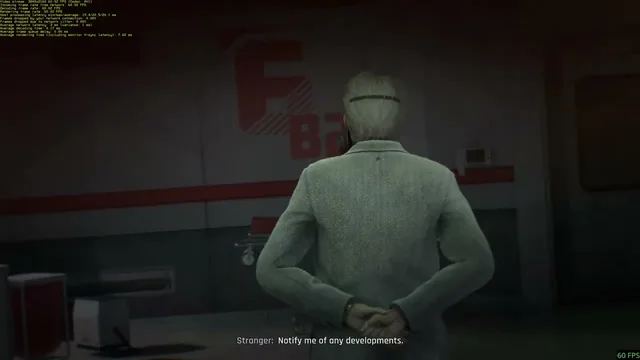
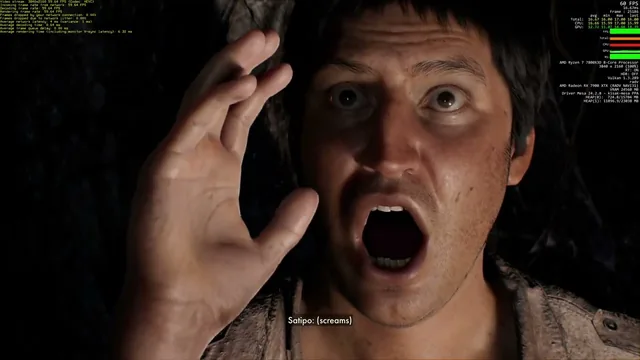
Undead Nightmare is the zombie-horror companion story to the original Red Dead Redemption. It places John Marston in a transformed version of the western setting, where a supernatural outbreak turns familiar places into a different kind of frontier. The adventure combines open-world travel, combat, and encounters shaped by the undead premise. The PC release packages the original Red Dead Redemption and Undead Nightmare single-player experiences together, with work from Rockstar Games and Double Eleven. This is the original game’s expansion, distinct from Red Dead Redemption 2, and its tone offers a different take on Marston’s world.
- Developer
- Rockstar Games · Double Eleven
- Play style
- Single-player open-world action
Inside this recording
The PC expansion in a 4K Linux session
Uploaded on October 31, 2024, this 24-minute, 41-second video identifies a 4K setup using a Ryzen 7800X3D and Radeon RX 7900 XTX. It documents the PC release of Undead Nightmare running on Linux through Maximum Settings. The upload does not identify a graphics preset or native/upscaled rendering mode.
A classic setting, a different genre
The expansion pairs open-world exploration with a horror setting, making it a natural companion to the Dying Light and S.T.A.L.K.E.R. recordings. Those videos use their own setups and dates; their pages provide the context for each session.
How to read the resolution and performance details
The setup above uses information published with the video. Linux was confirmed by Maximum Settings for this recording. “Video uploaded” identifies the YouTube publication date; “Added to the library” identifies the webpage’s publication. Neither is a new compatibility test.
A recording’s stated resolution, its native or upscaled rendering resolution, and the quality selected in YouTube are different things. Game FPS, the cloud stream’s target frame rate, and YouTube playback FPS are also separate. Any benchmark result shown on this page belongs to the stated recording and method; an FPS label in a title is not an averaged benchmark result.